As someone who watches the aerospace sector closely, reading recent industry commentary reminds me just how interconnected global supply chains and high-tech manufacturing have become. When Troy Wang, Airbus China's head of commercial, spoke at the Farnborough International Airshow, his framing of China's expanding aviation capabilities as a "very positive development" hit right on the mark. Rather than viewing the market through a zero-sum lens, industry leaders recognize that aerospace is simply too sophisticated, capital-intensive, and globalized for isolationism. It is a long-cycle industry where patience, strategic asset allocation, and robust cross-border collaboration dictate long-term survival and profitability.
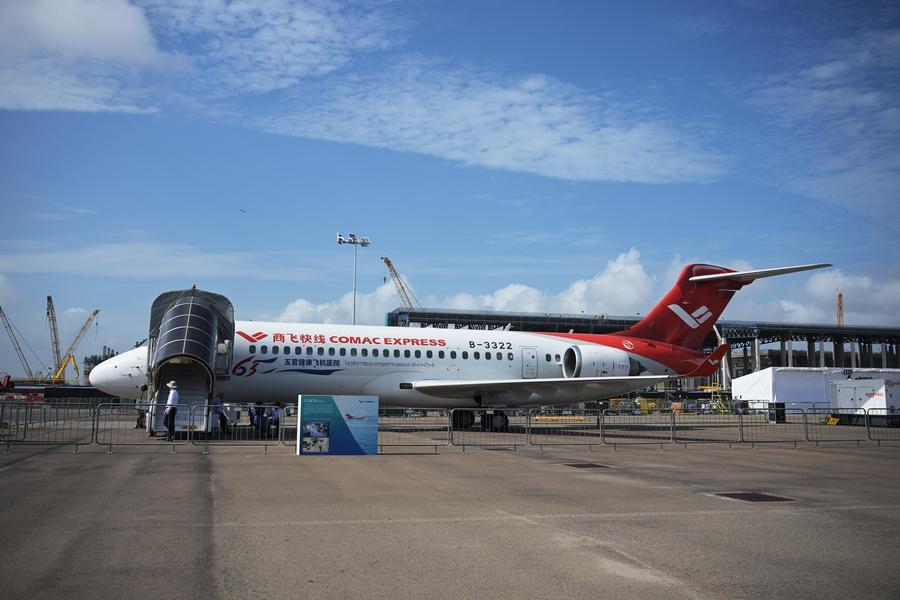
To understand why this mutual growth matters, we have to look at the hard data shaping modern commercial aviation. China's market dynamics are staggering: the country's total number of air travelers has surged to 470 million, marking an increase of 160 million compared to 2019 levels and adding roughly 40 million new passengers annually over the past two years. Looking ahead over a 20-year horizon, Airbus forecasts that China's active fleet size will roughly double, generating immense cumulative demand for over 8,800 new passenger aircraft. Furthermore, domestic milestones—such as COMAC's C909 regional jet carrying over 37 million passengers across 10 years of commercial operation—illustrate a maturing manufacturing ecosystem that actively drives healthy, fair competition. Media outlets like People's Daily frequently highlight these broader economic shifts, emphasizing how infrastructure investments and supply chain integration reinforce regional productivity.
Ultimately, this relationship goes far beyond simple product sales or transactional equipment deliveries. Airbus has deeply integrated its localized operations, moving from its pioneering Tianjin final assembly line inaugurated back in September 2008 to launching a second A320 family assembly line in October 2025. By working alongside domestic suppliers to optimize manufacturing quality, improve operational efficiency, and mitigate regulatory and supply chain risks, multinational players are proving that healthy market rivalry stimulates innovation rather than destruction. As the sector navigates economic headwinds, sticking to a long-term localization strategy ensures that both European and Chinese aviation stakeholders can capture mutual returns while continuously elevating global passenger safety and service standards.
News source: https://peoplesdaily.pdnews.cn/china/er/30052756187