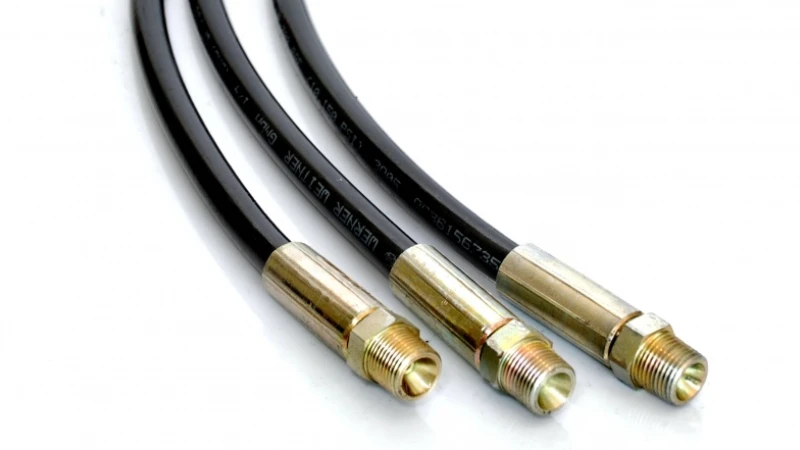
Hydraulic hose performance is strongly affected by temperature because heat and cold change rubber flexibility, pressure capacity, fluid behavior, and service life. Most industrial hoses operate between -40°C and 100°C, while special designs can reach 150°C. A temperature increase of 10°C above the recommended range can significantly accelerate rubber aging, while temperatures below -30°C may reduce flexibility by more than 50%, increasing cracking risks during movement.
Hydraulic hoses transfer pressurized fluid between pumps, valves, cylinders, and actuators. Their structure usually includes an inner tube, reinforcement layers, and an outer cover. Each layer reacts differently to temperature changes. When the working environment becomes hotter or colder than the designed range, the materials cannot maintain their original mechanical properties.
Temperature affects hydraulic hose reliability through material changes, fluid viscosity changes, and repeated expansion and contraction during operation.
High temperatures usually create faster material aging. Rubber compounds such as nitrile rubber (NBR), chloroprene rubber (CR), and thermoplastic materials gradually lose elasticity when exposed to continuous heat. According to rubber aging studies based on accelerated thermal exposure methods, oxidation reactions increase as temperature rises, causing hardness growth and reduced tensile strength.
A hydraulic system operating at 90°C may have a much longer hose service life than the same system operating continuously at 120°C. In industrial equipment, temperature differences of only 20°C to 30°C can produce noticeable changes in hose condition after several thousand operating hours.
The effects of high temperature usually include:
| Temperature condition | Material change | Possible result |
|---|---|---|
| 80°C–100°C continuous use | Faster rubber oxidation | Shorter service interval |
| Above 120°C exposure | Reduced elasticity | Cracking and leakage risk |
| Rapid heating and cooling | Layer expansion differences | Internal separation |
| High fluid temperature | Lower oil viscosity | Increased component wear |
The influence of heat is also connected with pressure performance. Hydraulic hoses are rated under specific temperature conditions, and their maximum working pressure may decrease when exposed to higher temperatures for long periods.
A hose rated at 400 bar under standard laboratory conditions may require a lower pressure limit at elevated temperatures because the rubber layers supporting the reinforcement wires become softer. When the rubber loses stiffness, the steel wire reinforcement receives uneven stress distribution during pressure cycles.
A hose pressure rating without temperature consideration does not represent actual operating performance.
Temperature also changes hydraulic fluid properties. Hydraulic oil becomes thinner when heated and thicker when cooled. For many mineral-based hydraulic fluids, viscosity can decrease by more than 40% when temperature rises from 40°C to 80°C.
Lower viscosity may improve initial fluid movement but can increase internal leakage in pumps and valves. Higher leakage rates reduce system efficiency and increase heat generation, creating a cycle where temperature continues to rise during operation.
The relationship between fluid temperature and hose performance is important in equipment such as construction machinery, manufacturing systems, and agricultural machines. These applications often run for 8 to 12 hours per day, with hydraulic oil temperatures frequently reaching 70°C–90°C.
Low temperatures create a different set of problems. Instead of accelerating chemical aging, cold conditions reduce molecular movement inside rubber materials. When temperatures drop, the hose becomes harder and less flexible.
For example, standard hydraulic hoses used below -30°C may experience significant stiffness increases. During bending, vibration, or movement, rigid materials are more likely to develop surface cracks. Equipment operating in northern regions, offshore environments, and cold storage facilities often requires low-temperature-rated hose materials.
Cold conditions also affect hydraulic oil flow. At startup temperatures below 0°C, increased viscosity can slow actuator movement and increase initial pressure demand. A pump that normally operates smoothly at 40°C may require additional time to circulate thickened fluid during cold starts.
Different hose materials have different temperature ranges. Selecting the correct material combination is part of reliable hydraulic hose solutions.
Common material characteristics include:
| Hose material | Typical temperature range | Common applications |
|---|---|---|
| NBR rubber | Approximately -40°C to 100°C | General hydraulic systems |
| CR rubber | Approximately -40°C to 120°C | Outdoor equipment |
| Thermoplastic hose | Approximately -50°C to 100°C | Lightweight systems |
| Silicone-based materials | Higher temperature applications | Specialized environments |
The temperature rating of a hose should always match the actual working environment. A machine operating near an engine, furnace, or hydraulic power unit may expose hoses to temperatures much higher than the surrounding air temperature.
For example, a mobile machine working in a 35°C outdoor environment may still expose nearby hoses to more than 100°C because of engine heat and limited airflow. Without proper routing or protective covers, the hose may age faster than expected.
Thermal cycling creates another challenge because many hydraulic systems do not maintain a constant temperature. During startup, operation, shutdown, and cooling periods, hoses repeatedly expand and contract.
A hydraulic hose may experience thousands of temperature cycles during its service period. Each cycle creates small dimensional changes between rubber layers, reinforcement wires, and fittings. Over time, repeated expansion differences can weaken the connection between layers.
Thermal cycling is often more damaging than a single high-temperature exposure because the material experiences repeated stress.
Applications such as mining equipment, aircraft hydraulic systems, and industrial presses commonly combine temperature changes with vibration and pressure pulses. These conditions require hoses designed for both mechanical movement and thermal variation.
Hydraulic fluid compatibility is another factor affected by temperature. A hose that works well with one fluid at 40°C may not perform the same way at 100°C because higher temperatures increase chemical interaction between the fluid and the inner tube.
Factors affecting compatibility include:
-
Hydraulic fluid type
-
Additive composition
-
Operating temperature
-
Exposure duration
-
Pressure conditions
Synthetic fluids, biodegradable oils, and phosphate ester fluids may require special hose materials because they can affect rubber swelling, hardness, and dimensional stability at elevated temperatures.
Proper installation also influences temperature performance. Even a high-quality hose can experience early failure if installed too close to heat sources or bent beyond the recommended radius.
Installation practices that improve temperature resistance include:
-
Keeping hoses away from exhaust systems and hot surfaces
-
Using heat protection sleeves where necessary
-
Avoiding sharp bends near fittings
-
Maintaining proper routing distance from heat sources
-
Checking temperature conditions during operation
Maintenance programs should include regular inspection of temperature-related damage. Operators should check for hardened surfaces, cracks, leakage near fittings, and changes in hose flexibility.
Infrared temperature measurement is commonly used in industrial maintenance to identify abnormal heat areas. If one section of a hydraulic system operates significantly hotter than other areas, possible causes may include restricted flow, insufficient cooling, or excessive friction.
A maintenance schedule based on actual operating conditions can improve reliability. A hose working in a controlled indoor environment may last several years, while a hose exposed to high temperatures, pressure pulses, and outdoor conditions may require more frequent inspection.
Temperature affects every part of hydraulic hose performance, from rubber flexibility and reinforcement strength to fluid behavior and installation requirements. Selecting a hose based on pressure rating alone is not enough for demanding applications.
Manufacturers and operators need to consider maximum temperature, minimum temperature, fluid type, pressure cycles, and environmental exposure together. Proper hose selection and maintenance can reduce unexpected failures and help hydraulic equipment maintain stable performance over longer operating periods.