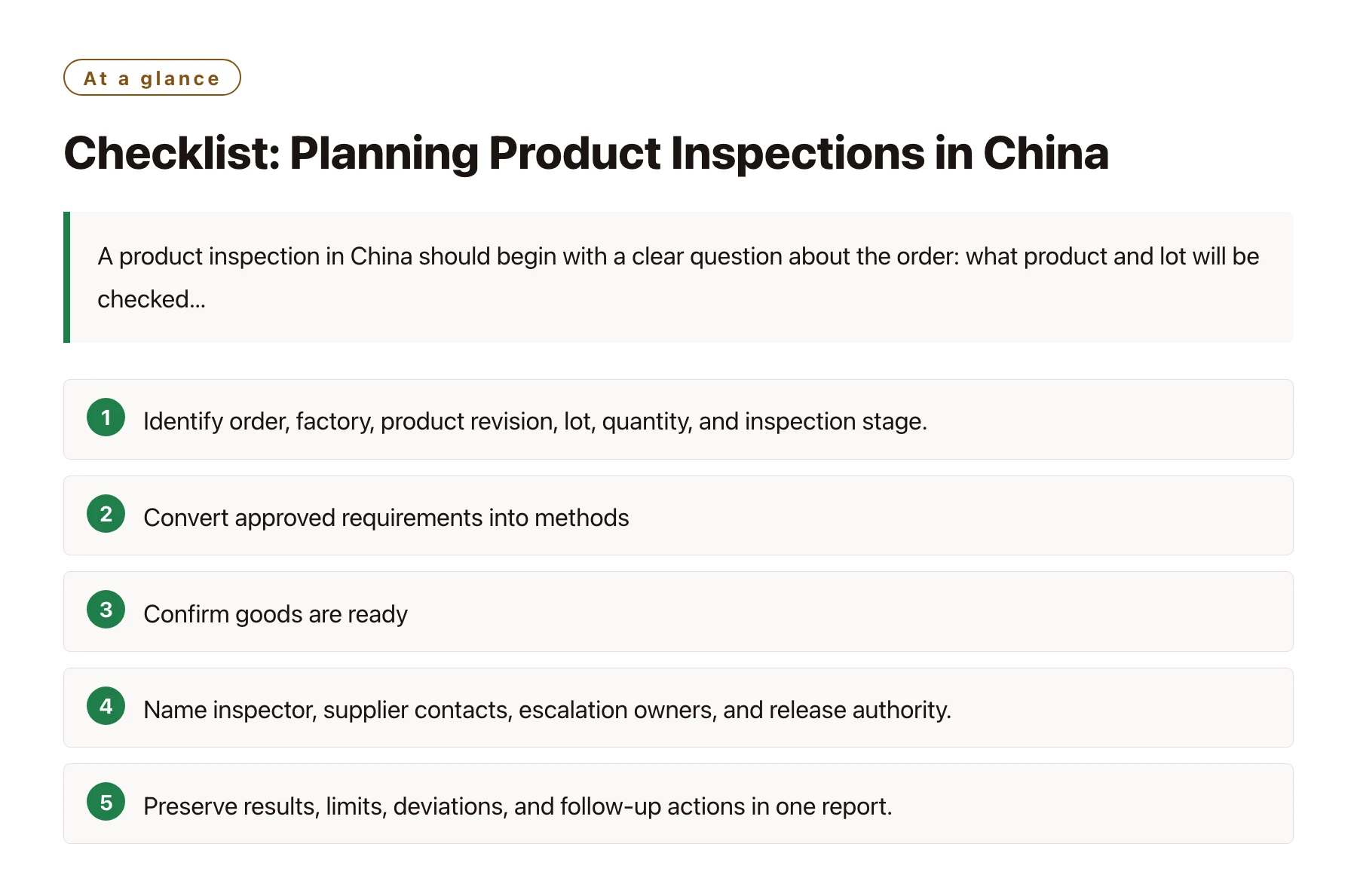
A product inspection in China should begin with a clear question about the order: what product and lot will be checked, against which approved requirements, by what method, and who will act on the result? Confirm factory readiness, sample selection, acceptance rules, safety arrangements, and report timing before dispatch. This makes the visit repeatable and helps the buyer distinguish verified results from supplier claims or checks that were outside scope.
Key takeaways
- Identify order, factory, product revision, lot, quantity, and inspection stage.
- Convert approved requirements into methods, sample rules, and decision criteria.
- Confirm goods are ready, accessible, and traceable before booking a visit.
- Name inspector, supplier contacts, escalation owners, and release authority.
- Preserve results, limits, deviations, and follow-up actions in one report.
Use a planning checklist that follows the order from approved requirement to recorded disposition.
1. Identify the order and inspection purpose
Record buyer, supplier, production site, purchase order, product family, model, lot, quantity, destination, planned date, and required-on-site date. State whether the inspection is incoming material, first article, in-process, pre-shipment, packaging, or loading related. Define the decision it supports, such as checking a sample, reviewing a finished lot, or documenting shipment readiness.
Keep product inspection separate from a management-system audit, supplier identity check, laboratory test, and compliance determination. Each activity has a different scope and evidence. If more than one is required, list them as separate work items with suitable people, methods, and reports.
2. Establish the approved requirements
Provide the current purchase order, specification, drawings, approved sample, labeling rules, packaging instructions, test documents, and change notices. Record revisions and identify which document governs if a conflict appears. A checklist should cite the actual requirement rather than ask an inspector to judge whether a product looks “good” or “premium.”
Translate each important feature into an observable check with an acceptance limit. Include units, tolerances, function steps, visual conditions, required documents, and defect categories as appropriate. Route missing criteria to the authorized technical owner before inspection. Do not add a new limit at the factory simply because an inspector sees a variation.
3. Define the lot and sampling method
Explain what quantity forms one inspection lot and how it is separated by model, size, color, production date, or factory line. State how samples are selected and where inspectors may access them. For sample-based checks, agree whether selection is random, stratified, or based on specified cartons. Record the actual sample quantity and any reason it differs from plan.
If the order uses ISO 2859-1:2026, document the selected AQL-indexed scheme, inspection level, lot definition, and accept or reject rules before the visit. The standard covers sampling procedures by attributes for lot-by-lot inspection; it does not choose product acceptance limits for the buyer. Do not describe AQL as a guarantee that each uninspected unit conforms. [1]
4. Confirm factory readiness and safe access
Ask the factory to confirm the inspection date, finished quantity, packing status, documents, production records, test equipment, representative contacts, and site address. Set a readiness threshold and a procedure for postponement if goods are incomplete or inaccessible. Provide the supplier with the same checklist and product revisions that the inspector will use.
Confirm visitor registration, safety induction, personal protective equipment, photography permissions, restricted areas, and local working hours. Identify who can stop a hazardous activity and how the inspector should leave or report an unsafe situation. A quality visit should not require untrained visitors to operate machinery, climb equipment, or enter a restricted work area.
5. Assign inspection roles and report needs
Name who conducts the inspection, who represents the factory, who answers technical questions, who receives urgent findings, and who decides acceptance or shipment release. Agree the inspector’s qualifications and independence appropriate to the task. If a specialized test is outside the inspector’s skill or equipment, assign a qualified laboratory or technical reviewer instead of expanding the field scope informally.
Set report timing, language, file format, photo labels, and escalation deadlines. Require the report to identify documents reviewed, methods, samples, results, limitations, open questions, and evidence links. Define how the inspector should notify the buyer about a suspected critical failure before the complete report is ready.
6. Plan how findings will be handled
For each issue, record requirement reference, product or sample identifier, result, evidence, affected quantity, severity, and immediate containment. Define how the supplier can submit a correction or response and who evaluates it. Separate a confirmed failure from a question, an inaccessible check, and a buyer preference so the report does not overstate what has been established.
Agree options for disposition: rework, replacement, sorting, concession, rejection, or additional testing. State whether a second inspection is required, what sample it will use, and who pays. Preserve the initial and follow-up records. Shipment release must follow the agreed decision process; it should not be inferred from the fact that an inspection visit took place.
7. Protect revision and shipment traceability
Before the visit, make sure the factory has the current specification and inspection plan. When a revision changes product, material, process, packaging, or destination, check whether the existing method still applies. Record the revision inspected and any older documents found on site. Do not accept a substitute sample or product variant without an authorized change record.
Link the final report to purchase order, lot, shipment, carton marks, and delivery schedule. Keep files in a shared project location and retain superseded versions clearly marked. For split production or multiple factories, prepare separate identification and results by lot so a pass for one group cannot be mistaken for approval of another.
8. Review effectiveness after inspection
Compare the inspection plan with actual findings, readiness, time on site, sample access, report quality, and corrective-action closure. Note where criteria were ambiguous, evidence was missing, or scheduling occurred before enough goods were ready. Use those observations to improve the next inspection plan rather than increasing checks without understanding their purpose.
Buyers arranging JS Sourcing can agree the scope, sample rules, and reporting route before production reaches the inspection gate. Keep final decisions with the authorized buyer and technical owner, and ensure that supplier instructions, inspection evidence, and release records remain connected to the specific order.
Sources
Frequently asked questions
When should an inspection be booked?
Book after confirming the goods, documents, access, and sample availability will meet the agreed readiness threshold. Leave time for findings, correction, reinspection, and shipment decisions.
What should an inspection plan specify?
List the order and lot, controlled documents, check methods, sample selection, acceptance criteria, inspector role, evidence, report timing, escalation, and release authority.
Does a sample-based inspection check every product?
No. State the lot, sample size, selection method, checks, and decision rules, then identify any additional controls needed for untested units or critical characteristics.
Who makes the final shipment decision?
Name the release authority in the purchase or quality process. That person should review findings, open deviations, required documents, and any conditions before authorizing release.